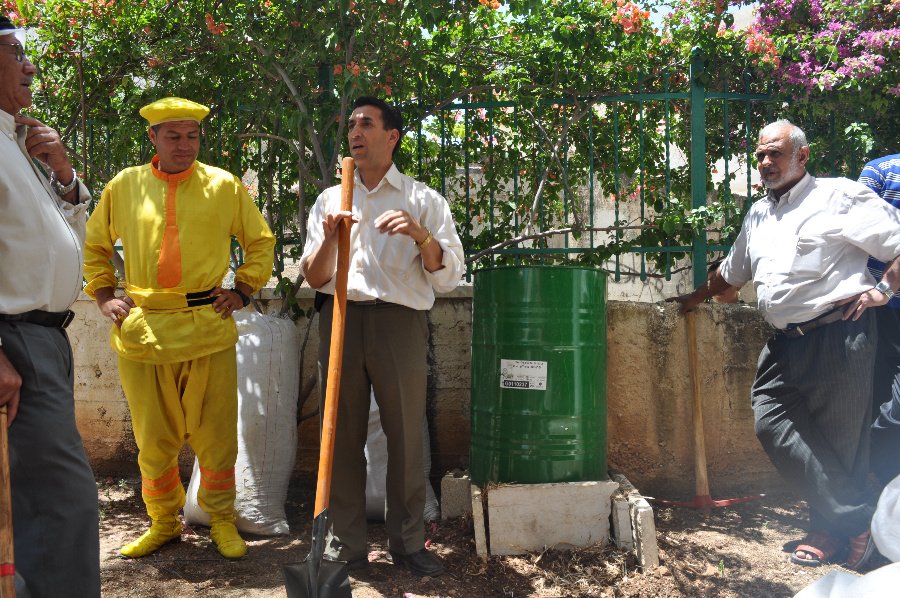
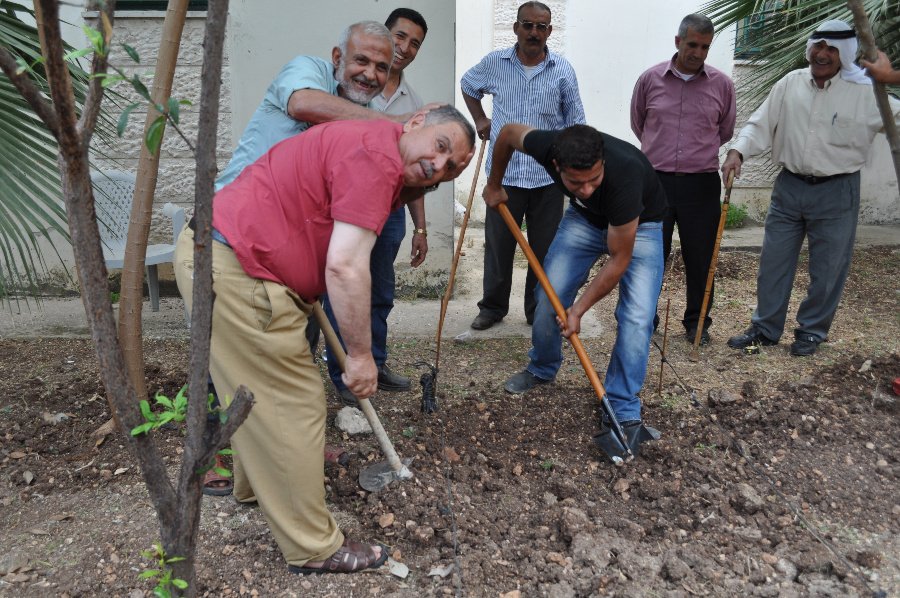
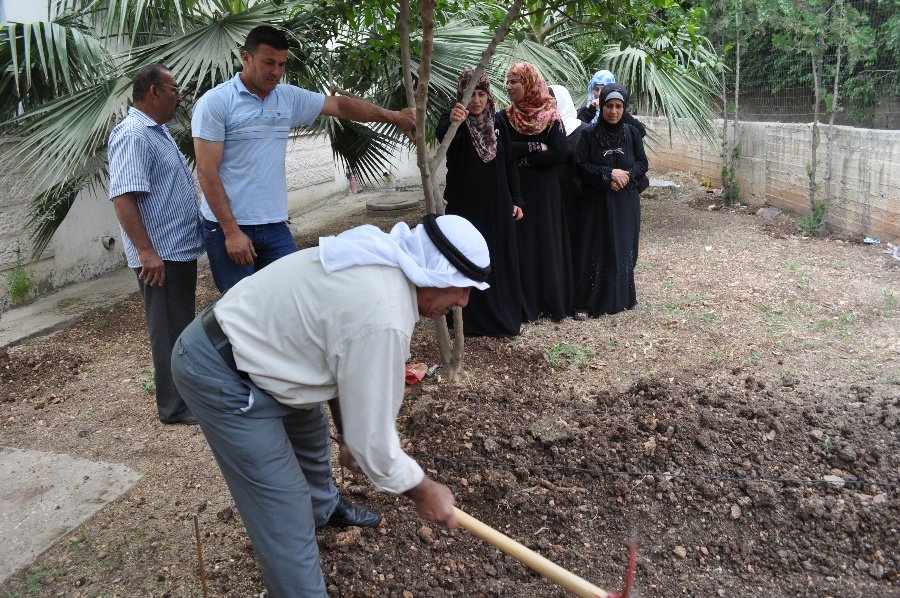
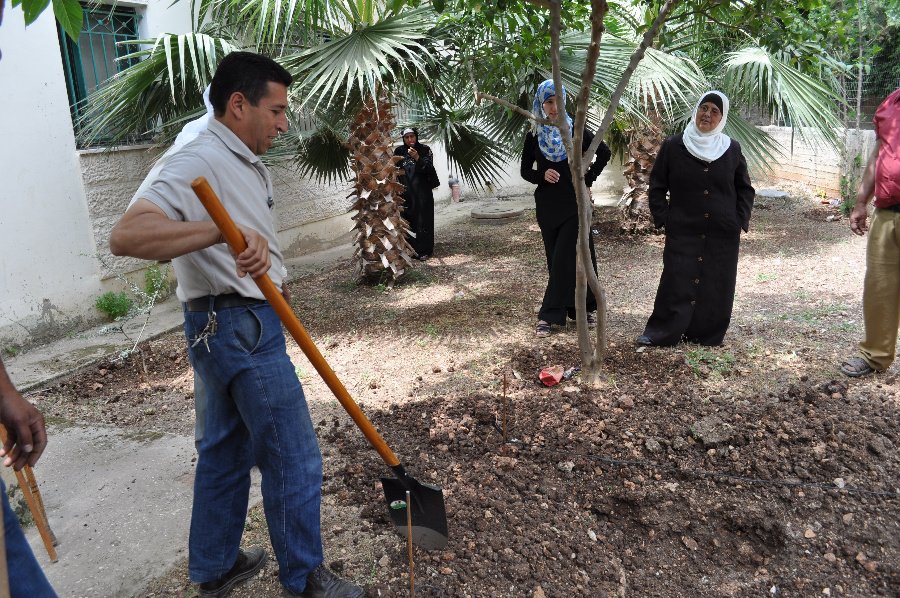
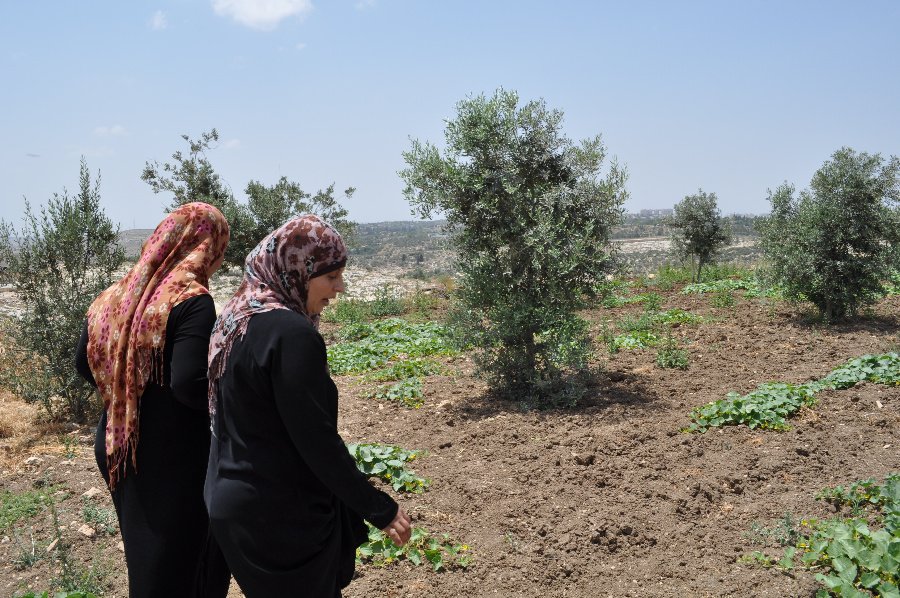
Deir Qaddis is a small agricultural village in Ramallah and Al Bireh governorate; almost every house has a small garden surrounded. It is marginalized because it is far from Ramallah city.The inhabitants of Deir Qaddis are interested in any activity to raise the awareness of solid waste management. That’s why JSC was interested to give omposting training activities in this village. The main objectives of implementing composting activity in Deir Qeddis, are to raise awareness among households, reduce and reuse kitchen and yard waste, and to encourage people to find an alternative of the chemical fertilizers. JSC targets 20 household and applied practical trainings on composting process in corporation with Mr. Saed Dagher, an expert in organic farming.
Accordingly, a proposal for the needed containers was handed to GIZ. After the approval, 270 containers were purchased with total cost of 58,050 NIS.
What is Composting?
Compost is organic material that can be used as a medium to grow plants. Mature compost is a stable material with content called humus that is dark brown or black and has a soil-like, earthy smell. It is created by: combining organic wastes (e.g., yard trimmings, food wastes) in proper ratios into barrels; adding some wood chips and paper as necessary to accelerate the breakdown of organic materials; and allowing the finished material to fully stabilize and mature through a curing process.
Natural composting, or biological decomposition, began with the first plants on earth and has been going on ever since. As plants falls to the ground, it slowly decays, providing minerals needed for plants and animals. Mature compost, however, includes the production of high temperatures to destroy pathogens that natural decomposition does not destroy.
Composting Benefits:
• Reduces landfill waste. Most landfills are quickly filling up, and large portion of landfill waste is made up of compostable materials.
• Recycles kitchen and yard waste. Composting can divert as much as 30% of household waste away from the garbage can.
• Good for the environment. Composting offers a natural alternative to chemical fertilizers.
• Introduces beneficial organisms to the soil. Microscopic organisms in compost help expose the soil, break down organic material for plant use and ward off plant disease
• Soil conditioner. Compost creates rich humus for gardens. This adds nutrients to the plants and helps retain moisture in the soil.